

In a 2024 International Energy Agency report on batteries and energy security, Executive Director Fatih Birol said a sustainable future will “critically hinge on whether or not we will see batteries having a significant market share in the global energy system.” Two years later, the agency reported that usage of lithium-ion batteries had increased sixfold since 2020. China has had an enormous impact on this dramatic increase in uptake.
A lot of the country’s efforts in the industry are in pursuit of the ever-increasing demand for EVs. China has truly embraced electric cars, with the World Resources Institute noting that 11.3 million of them were sold in the country in 2024. This represented just slightly under half of all vehicles purchased there. The Chinese lithium battery industry, then, is gigantic, but it’s powering a lot more than just EVs.
It was the rise of other portable, rechargeable devices like smartphones that brought the technology to prominence, and these areas are still of great global importance. These batteries are also becoming ever more crucial in the storage of excess energy from wind and solar generators, another area where China is at the forefront. Its largest solar farm is doing a lot more than generating energy, in fact. Here’s a closer look at the Chinese lithium battery industry — and how China came to dominate the global market.
A huge role in the industry beyond powering EVs
There’s no denying that the vast majority of EV battery production in China is dedicated to the EV industry. In fact, Shanghai Metals Market noted the size of the disparity in April 2025: Slightly over 70% of lithium batteries were produced for this purpose, while just 8% of production was dedicated to “small lithium-ion batteries for consumer products”, such as smartphones. Chinese industry in this area is critical to meeting smartphone demand. According to Forbes, this has been the case for several years, with the outlet reporting in 2019 that the country is responsible for 73% of the world’s lithium cell production. To put this into perspective, the United States was the next-highest producer, at just 12% of the global total.
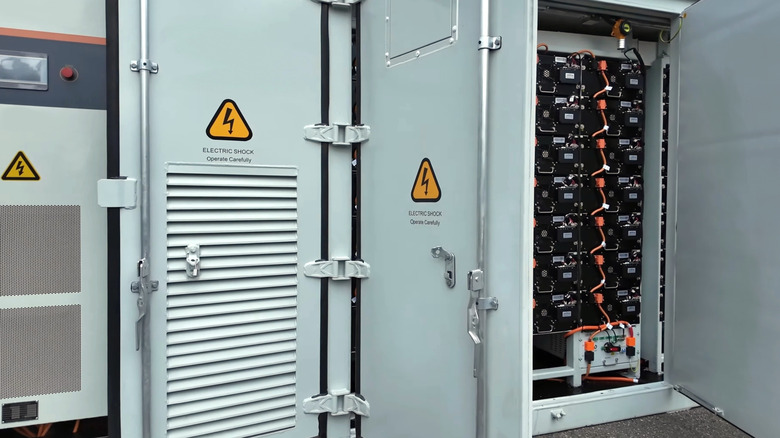
China, arguably, has just as important a role in advancing the cause of energy storage for greener sources such as solar and wind. The more such energy is used, though, the greater the storage capacity needed, and new-type energy storage systems (NTESS) use a range of technologies to accomplish that. In 2022, lithium-ion batteries amounted to 94% of the capacity offered by these methods, an invaluable means of keeping this greener energy surplus available when it’s needed.
In short, China is absolutely dominant in the lithium-ion battery industry, creator of four-fifths of all such batteries developed in 2025. What’s just as remarkable is the way they achieved it. Government policies, pioneering companies, and timely innovations during the 2008 Olympics all played their part.
The sheer scale of the Chinese lithium battery industry
The U.S. Energy Information Administration notes that, in 2023, Chinese brands controlled one-quarter of the world’s lithium mining capacity, and that it imported 12 million short tons of “raw and processed battery materials” while exporting almost 11 million short tons of “battery materials, packs, and components.” To get a sense of the scale of this Chinese operation, both of these figures are around six times those of the entire continent of Europe.
The Beijing Olympics in 2008 represented an enormous turning point in the country’s adoption of lithium batteries. It began with a fleet of approximately 50 battery-powered Olympic buses, the first time that China had created such models or the industry infrastructure to support them. Their successful utilization, however, proved to be a very significant early step towards further government measures, like 2009’s Ten Cities and One Thousand Vehicles program, which ran until 2012 and aimed to have ten select cities adopt 1000 new energy vehicles via incentives of up to 60,000 yuan ($8,700) for buyers.
China is home to lithium-ion battery manufacturing powerhouses such as CATL and BYD, and the development of these homegrown heavyweights has its roots in policies that precipitated industry growth from within. Local governments across China were engaged in coordinating and developing the infrastructure to make the best use of this developing asset. The nation now has huge control over every aspect of the lithium battery industry, from mining to production, resulting in a commanding position on the global stage. Lithium batteries have their problems and disadvantages, but at present, they’re a very convenient and versatile means of powering EVs, smart devices, and critical energy solutions, all technologies in which China has become a titan.