

TL;DR
- Model Access: Google has made two lower-cost Gemini Flash models broadly available and plans a restricted Flash Cyber pilot.
- Token Costs: Gemini 3.6 Flash costs $1.50 per million input tokens, while Flash-Lite starts at $0.30.
- Security Controls: Flash Cyber validates software flaws through CodeMender, but developers must approve every proposed patch before deployment.
- Competitive Test: Google’s price and security results still need independent confirmation against closed and open-weight alternatives.
Google has released two lower-cost models in its Gemini model family. Gemini 3.6 Flash is the higher-capability general-purpose model, while Gemini 3.5 Flash-Lite is the lower-cost, high-throughput option. Both are available to developers through Google’s application programming interface (API) and through its enterprise and consumer products. Google’s higher-end Gemini 3.5 Pro model is said to be facing coding-related delays.
Gemini 3.6 Flash pricing is $1.50 per million input tokens and $7.50 per million output tokens, versus $0.30 and $2.50 for Flash-Lite. A token is a unit used to meter model input and output costs. Google said its evaluation measured 17% lower output-token use than its predecessor, while the security-tuned new Gemini 3.5 Flash Cyber model remains planned for a restricted pilot.
Lower Costs Meet a Crowded Model Market
Gemini 3.5 Flash-Lite targets high-throughput work and reached 350 output tokens per second on the Artificial Analysis Index in Google’s evaluation. Its lower input price favors routing, extraction, classification, and small subtasks inside larger agent systems. Google positions 3.6 Flash as the higher-capability option at a higher cost.
Price, token efficiency, and output speed measure different things, so none alone establishes which model will cost less in production. Input charges grow with prompts and supplied documents, while output charges grow with generated text or code. Developers must test production traffic to see how request length, response length, retries, and latency affect the final bill.

OpenAI provides a nearby closed-model price comparison. It made GPT-5.6 Sol, Terra, and Luna available on July 9, with Luna priced at $1 and $6 per million input and output tokens. Gemini 3.6 Flash’s input and output rates are higher than Luna’s, while Flash-Lite has lower rates. Capability and workload differences prevent those prices from deciding the broader performance comparison.
Hosted API and open-weight models put costs in different places. API customers pay metered rates and leave hardware, scaling, and updates to the provider; open-weight deployments shift more of that burden to the user. An estimate indicates that open-weight models handled nearly one-third of Vercel’s AI requests in June 2026.
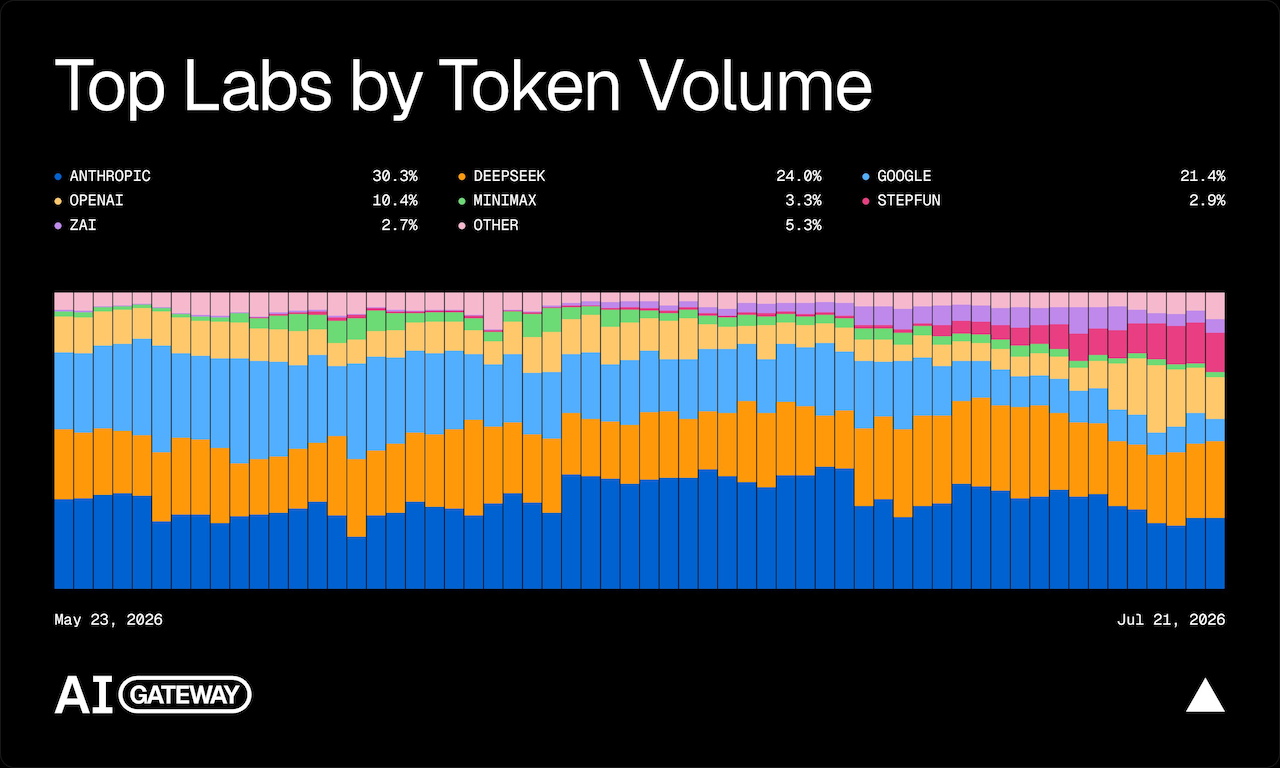
Z.ai recently released GLM-5.2 as an open-weight model for agentic coding and software-vulnerability identification.
Flash Cyber Keeps Humans in the Patch Loop
Gemini 3.6 Flash and Gemini 3.5 Flash-Lite are broadly available, but Gemini 3.5 Flash Cyber remains behind planned access controls. Google plans a limited Flash Cyber pilot through CodeMender, its code-security agent, for governments and trusted partners. Google is also conducting Gemini 3.5 Pro partner testing while its largest Gemini 4 pre-training run gets underway.
Google says Gemini 3.5 Flash Cyber found 55 confirmed issues in a fixed-invocation evaluation against V8, Google’s open-source JavaScript and WebAssembly engine. Gemini 3.5 Flash found 47 and Anthropic’s Claude Opus 4.6 found 36 under the same conditions. Google set and ran the evaluation, so the result is not independent proof of superiority.
At launch, CodeMender operated as an AI agent for code security that fixes software vulnerabilities. It scans repositories, verifies suspected flaws by running exploits in an isolated customer-controlled sandbox, and supports C/C++, Go, Java, Python, Ruby, Rust, and TypeScript. CodeMender returns successful fixes as code changes, but developers must approve patches before commit.
Human review predates the planned pilot. Researchers reviewed CodeMender patches before upstream submission in October 2025, and controlled testing expanded.
Competitors impose similar access limits on cyber capability. Anthropic uses restricted access for Claude Mythos, while OpenAI reserves additional GPT-5.6 defensive capability for verified users through a trusted-access program. Systems that validate flaws for defenders can generate working exploit paths, making user selection and deployment approval now part of product rollouts of all major US AI labs..